
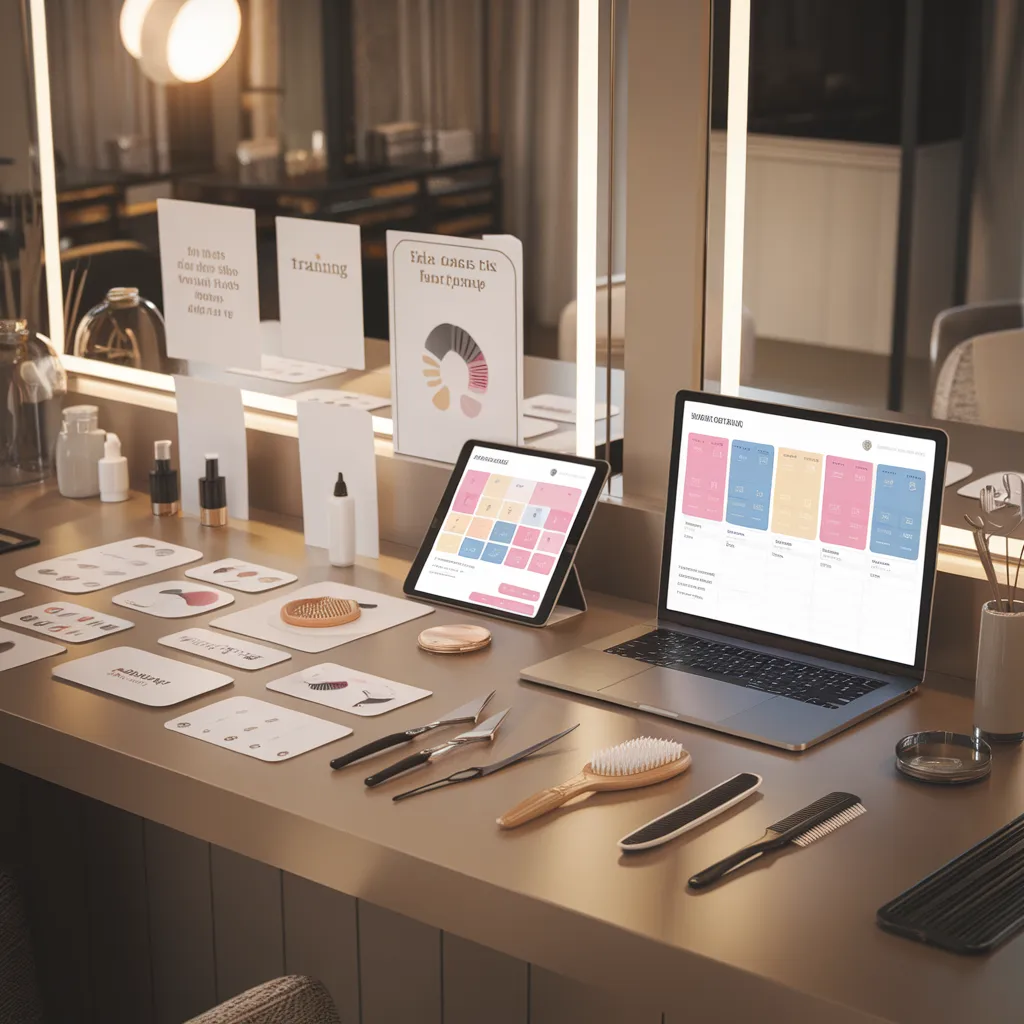
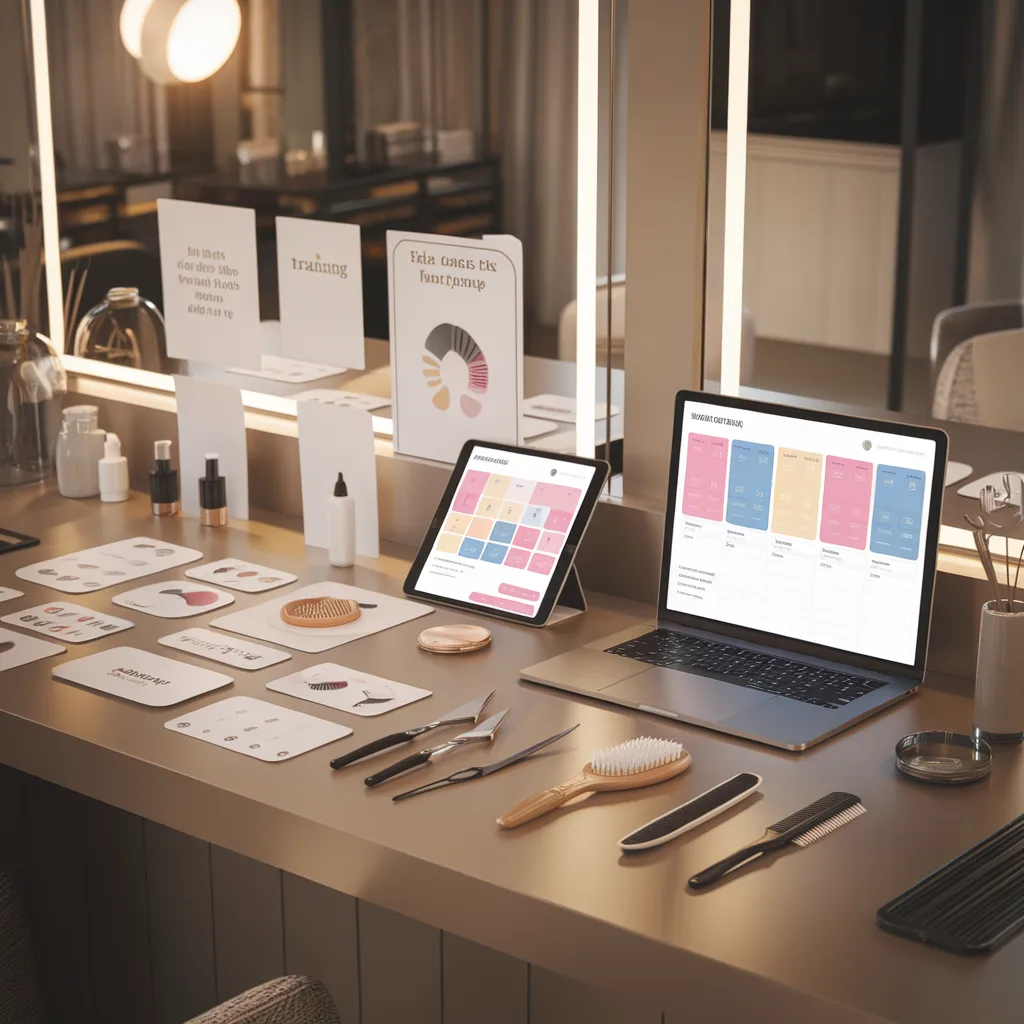
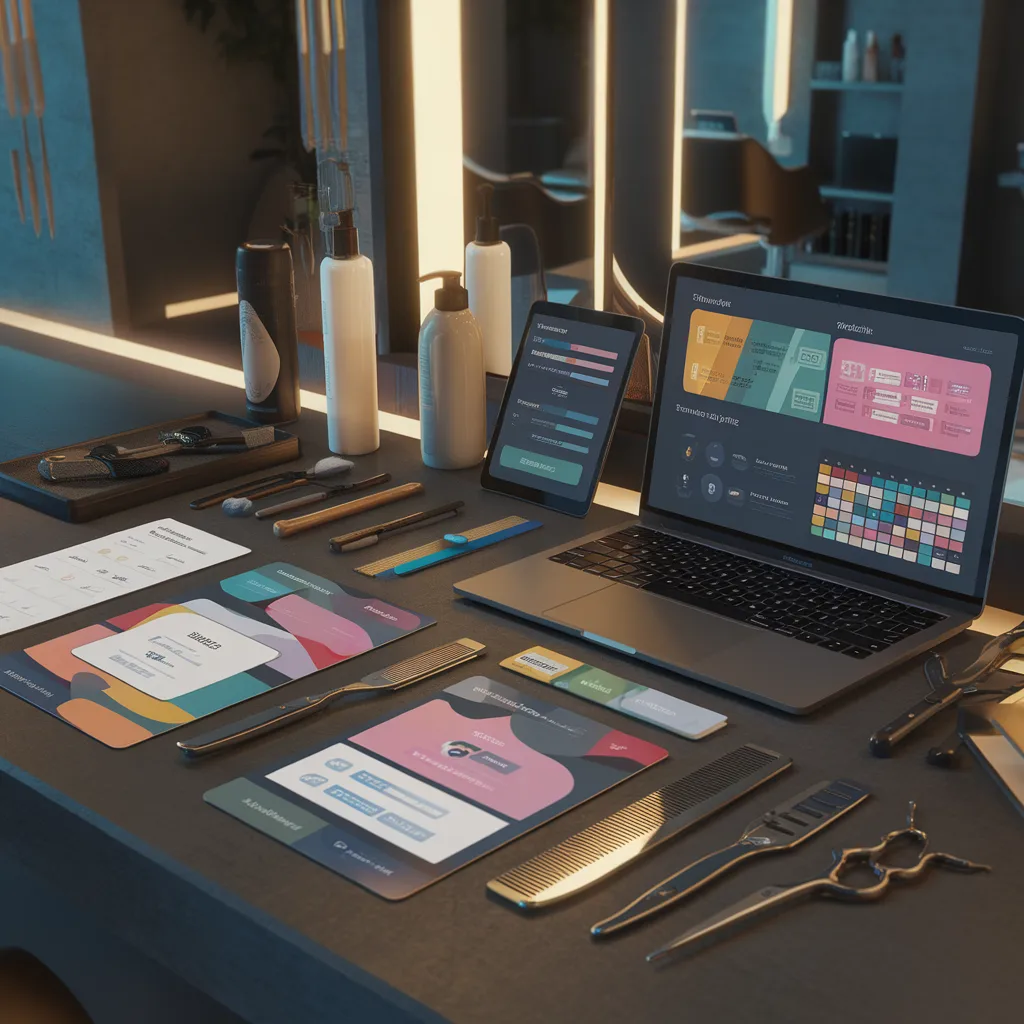
New Stylist Onboarding Training Kit
The Structured First-90-Days System for Bringing a New Stylist or Barber Into Your Team With Clarity, Confidence, and Zero Ambiguity
The new stylist starts on Monday.
If you have never built a proper onboarding system, Monday is when the panic quietly begins. What exactly do they do on the first day? Who shows them around? Where is the product backstock? What is the protocol for handling a new client they have never met? Who do they ask if they have a question when you are in the middle of a color service? What are the exact service prices and are they memorized or is there a reference somewhere? What does the salon expect from them in their first thirty days?
If none of those answers are written down anywhere — if the onboarding plan is “we’ll figure it out as we go” and “just shadow me for the first week” — the new stylist’s experience of joining the team is confusion dressed up as warmth. They will feel unable to ask certain questions because asking makes them seem unprepared. They will observe inconsistencies between how different team members do things and not know which is correct. They will default to their training school habits rather than the salon’s standards because nobody explicitly showed them what the salon’s standards are.
The Li-Bar New Stylist Onboarding Training Kit is the system that means Monday is the beginning of a confident, structured, professionally supported integration — not the beginning of a slow, expensive guessing period.
📥 Li-Bar digital exclusive. Instant download.
THE KIT — WEEK BY WEEK, STAGE BY STAGE
PRE-START PREPARATION
The Onboarding Package Sent Before Day One
The materials the new stylist receives before their first day that mean they arrive informed, prepared, and already feeling valued rather than dropped into an unknown environment.
The pre-start package includes: the salon culture document (the non-negotiables, the values, the team dynamic, and the unwritten rules written down — the document that means the new stylist understands what they are joining before they arrive), the service menu and pricing reference (memorized is the goal; the reference exists for the transition period), the dress code and appearance standards (specific and visual — not “professional” but the exact specification of what professional means in this salon’s context), the first day logistics (exact arrival time, who to ask for, where to park, what to bring, what to wear on day one), and the meet-the-team document (the brief profile of each team member — name, specialty, tenure, one personal detail that makes the introduction less awkward). ✅
The First Day Setup
The physical and operational setup completed before the new stylist arrives: the station assigned and prepared, the tools and products they will need for observation and initial work staged, the team briefed on the new arrival and their role in the welcome, and the first-day schedule prepared and printed so the new stylist knows exactly what to expect from the moment they walk through the door.
WEEK ONE: ORIENTATION AND OBSERVATION
The Day-One Protocol
The structured first day that covers every operational foundation without overwhelming: the physical orientation (every area of the salon, every storage location, every system they will use — including the booking system, the POS, and the product retail area), the team introduction (individual introductions to every team member with context), the observation schedule (the specific services they will observe and the observation brief for each — what specifically to watch for, what questions to bring back for discussion), and the first impressions conversation (the end-of-day check-in where the new stylist shares their initial observations and any questions that have arisen).
The Week One Standards Introduction
The systematic introduction to the salon’s operational standards across four categories:
Service standards: The consultation protocol, the service delivery standards, the timing expectations, and the quality indicators for each service type offered in the salon.
Communication standards: The client communication style, the phone and booking protocols, the team communication approach, and the digital communication policy.
Operational standards: The station maintenance, the sanitization protocol, the product usage and wastage standards, the opening and closing duties, and the stock management approach.
Professional standards: The timekeeping, the appearance, the phone usage, the client confidentiality, and the conduct standards that apply at all times. 📋
WEEKS TWO AND THREE: SUPERVISED PRACTICE
The Supervised Service Framework
The structured progression from observation to supervised delivery: the specific services cleared for supervised practice after week one observation (typically the simpler service types first — the dry cut, the simple blow-dry, the standard trim — before the chemically complex services), the supervision structure (the level of oversight appropriate for each service type, from closely supervised with the mentor present to supervised-at-distance where the mentor is available but not actively watching), and the post-service debrief (the structured feedback conversation after each supervised service — what went well, what to adjust, the specific technical point for next time).
The Technical Standards Checklist
The service-by-service technical standards checklist: for every service offered in the salon, the specific technical benchmarks that confirm the new stylist is meeting the salon’s standard before that service is cleared for independent delivery. Not a subjective assessment — a specific, observable criteria list. The checklist that means “cleared to work independently” means the same thing regardless of which experienced stylist is signing off. ✂️
WEEKS FOUR THROUGH EIGHT: BUILDING CONFIDENCE AND EFFICIENCY
The Client Interaction Development Program
The structured development of the new stylist’s client communication skills — the consultation, the during-service communication, the product recommendation, and the rebooking conversation — through a combination of coaching, observation feedback, and graduated independent practice.
The role-play practice protocols: the consultation simulation (the structured practice scenario where the mentor plays a specific client type — the indecisive client, the very specific client, the client who wants something that will not work for their hair type), the feedback structure for each role-play, and the independent consultation assessment at the end of week six.
The Retail and Product Recommendation Training
The product knowledge foundation (every retail product in the salon — the specific use, the application method, the client types it suits, and the language for recommending it genuinely rather than salesy) and the recommendation integration training (the technique for introducing product recommendations naturally during service rather than as a checkout conversation). The retail target introduction: the individual retail target, how it is calculated, and how it fits within the salon’s broader revenue model. 💰
WEEKS NINE THROUGH TWELVE: INDEPENDENT PRACTICE AND INTEGRATION
The Full Independence Transition
The checklist for full independent practice clearance: every service type, every client interaction scenario, every operational procedure assessed and signed off. The transition conversation between the mentor and new stylist that acknowledges the progress, identifies the remaining development areas, and establishes the ongoing support structure.
The Three-Month Review Framework
The structured ninety-day performance review — the first formal assessment of the new stylist against the standards introduced in the onboarding program. The review covers: technical performance, client feedback, retail performance, punctuality and reliability, team integration, and professional development engagement. The review format that is specific, evidence-based, and forward-looking — the conversation that produces a development plan for the next quarter rather than simply assessing the previous one.
The Ongoing Mentoring Structure
The support structure beyond the formal onboarding period: the weekly check-in (the fifteen-minute conversation between mentor and new stylist in the first six months), the monthly team training session, and the continuing education plan for the new stylist’s first year — the courses, the brand training, and the in-salon development opportunities that give the new team member a development roadmap and a reason to stay. 🌟
📂 COMPLETE LI-BAR FILE SUITE
📋 Complete Onboarding Kit PDF | 📦 Pre-Start Package Template — all documents (editable) | 📅 Week-by-Week Training Schedule Template (editable) | ✅ Technical Standards Clearance Checklists by service type (editable) | 💬 Role-Play Practice Scenarios — 8 client types (PDF) | 📊 90-Day Performance Review Template (editable) | 🎓 Product Knowledge Training Sheet Template (editable) | 🤝 Mentor Feedback Guide and Debrief Protocol (PDF)

Reviews
There are no reviews yet.