
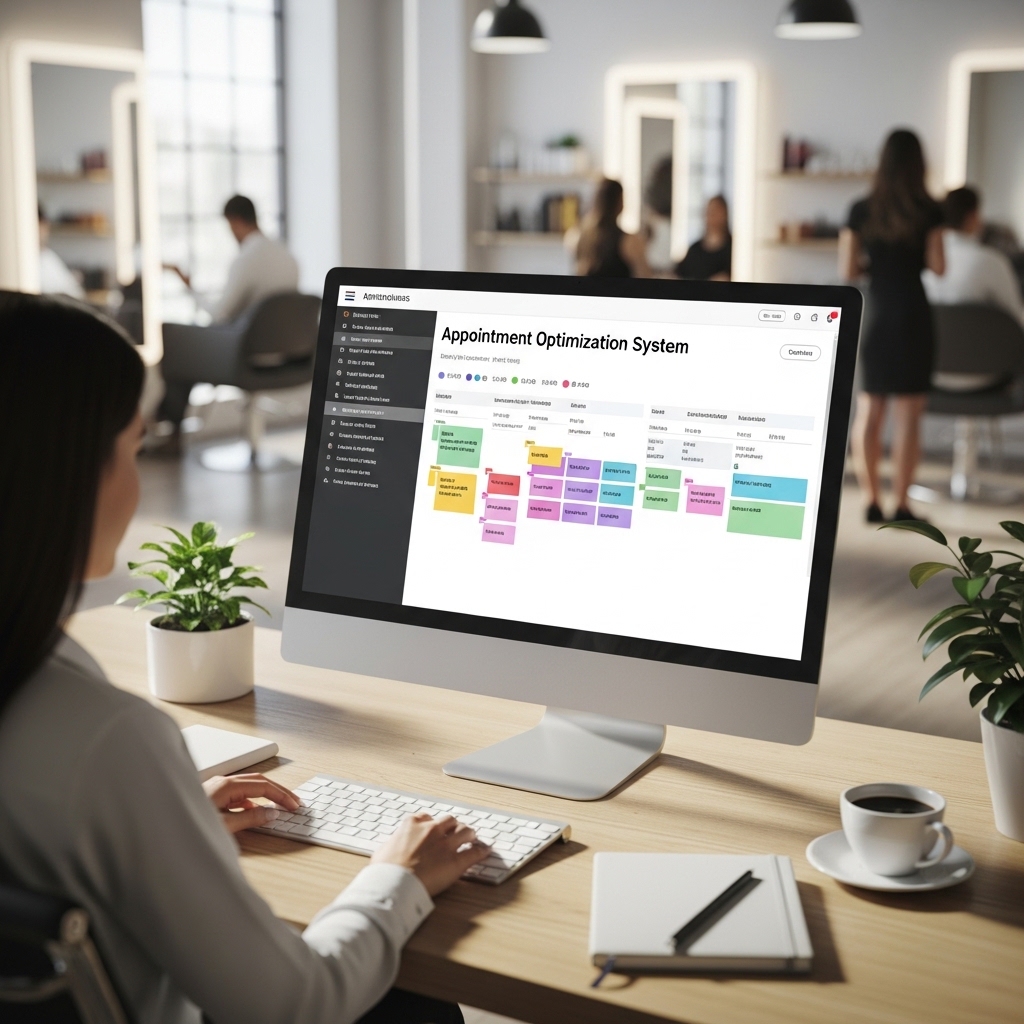
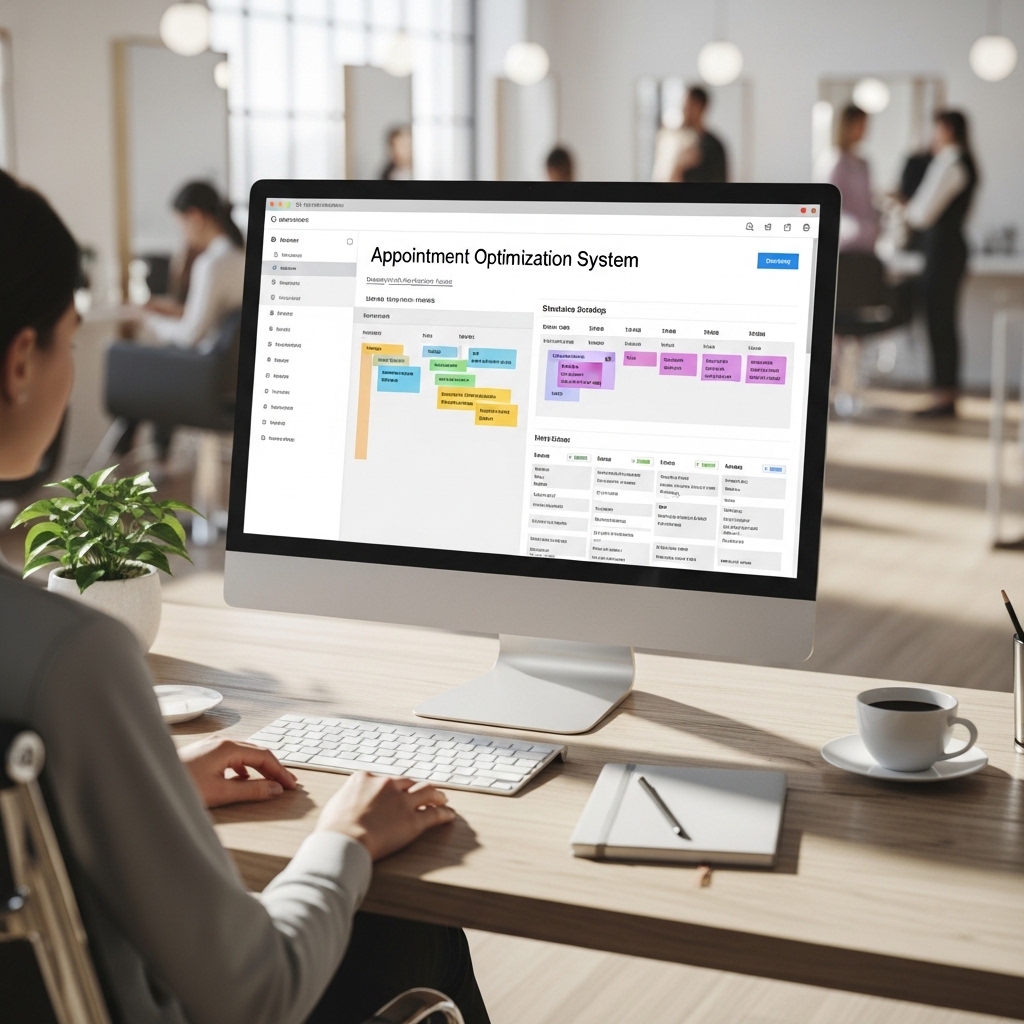
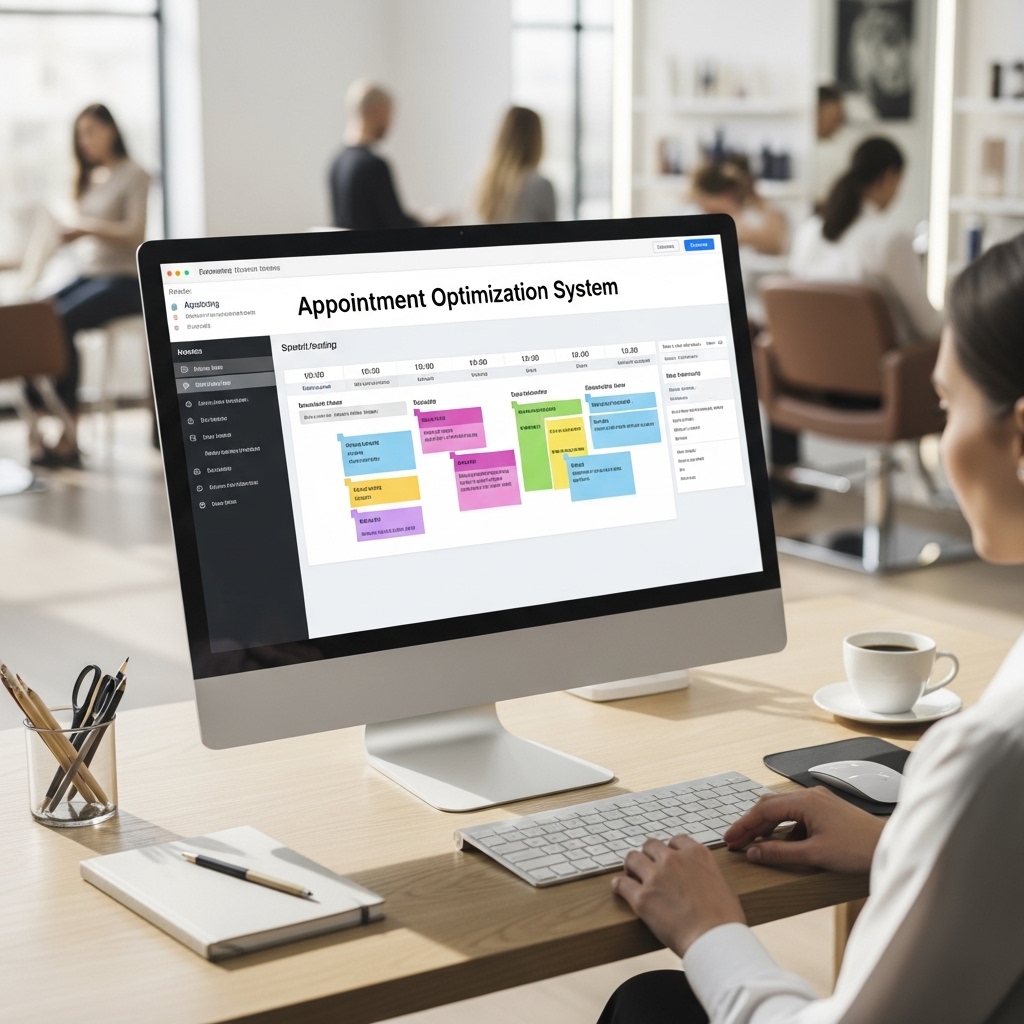
Salon Appointment Optimization System
The Scheduling Strategy, Gap Elimination, and Revenue Maximization System for Salons and Barbershops Running at Less Than Full Capacity
The appointment book is the heartbeat of the salon.
Every gap in it is a moment of potential revenue that will never return — the stylist’s time that passed without a booking, the chair that was empty during a slot that will not come back. Unlike inventory in retail, the salon’s “stock” — the stylist’s available time — expires every hour. The 10 AM slot that wasn’t filled on Tuesday is gone by 10:01 AM.
Most salon owners know their booking rate roughly. They have a sense of whether it was a good week or a slow week. What most do not have is the systematic, data-informed view of exactly where the gaps are occurring, why they are occurring, and what specific interventions close them.
The difference between a salon running at 70% booking capacity and one running at 90% booking capacity is not typically demand — it is the scheduling system, the gap-filling protocols, the waitlist management, and the last-minute availability communication that converts potential demand into actual bookings.
The Li-Bar Salon Appointment Optimization System is the complete toolkit for analyzing, managing, and maximizing the appointment book.
📥 Li-Bar digital download. Available immediately.
THE SYSTEM — COMPONENT BY COMPONENT
COMPONENT ONE: THE SCHEDULING ARCHITECTURE
The Optimal Schedule Design
The appointment schedule built for revenue optimization rather than operational convenience — which are not always the same thing. The optimal schedule design framework covers:
The service time allocation: The accurate time blocking for every service type, accounting for the actual time required (including the application time, the processing time, the rinse and dry time, and the checkout time) rather than the idealized time that produces overrunning appointments and late starts that compress the remainder of the day. The time allocation audit: for each service type, the comparison between the time currently blocked and the average actual time observed over the past month, and the schedule adjustment that reflects the reality.
The double-booking and color service scheduling: The efficient scheduling of colour services — the staggered booking system that allows the colourist to apply a second client’s colour while the first client’s colour processes, the colour service schedule template that maximizes the colourist’s productive time without creating waiting or quality compromises, and the technical limit on how many overlapping colour services can be managed without quality risk.
The transition time management: The time between appointments — the cleaning, resetting, and brief preparation time between each client. The minimum transition time by service type, the transition time allocation in the booking system that prevents the double-booking that creates a first-client delay, and the efficiency improvements that reduce necessary transition time without compromising sanitation or setup quality. ⏱️
The Peak and Off-Peak Analysis
The demand pattern analysis that reveals where the demand is concentrated and where the underutilization is chronic: the day-of-week booking pattern (the days consistently overbooked versus consistently underbooked), the time-of-day pattern (the peak morning and afternoon blocks versus the slow midday period that many salons accept as inevitable), and the stylist-by-stylist utilization comparison (the utilization differences between team members that may reflect booking system issues rather than demand differences).
The off-peak activation strategy: the specific interventions for the consistently underutilized time slots — the midday promotion targeted at clients with flexible schedules (the work-from-home segment, the retired client segment), the last-minute availability promotion for same-day slots, and the off-peak pricing incentive where appropriate for the salon’s positioning.
COMPONENT TWO: THE WAITLIST AND LAST-MINUTE AVAILABILITY SYSTEM
The Active Waitlist Management System
The waitlist that actively converts cancellations into filled appointments rather than passively recording client interest that is never acted on:
The waitlist intake process: The information captured for every waitlist addition — the client’s name, the service required, the stylist preferred (if applicable), the time-of-day flexibility (can they come at short notice on any day versus specific days only), the lead time required (the minimum notice needed to accept a last-minute slot — the client who needs three hours of notice differs from the one who can come within the hour), and the communication preference for waitlist contact.
The waitlist notification system: The automated or semi-automated communication protocol when a slot becomes available — the text message format that communicates the availability clearly (the date, the time, the stylist, and the service), the response window (the time allowed for the waitlist client to confirm before the slot is offered to the next person on the list), and the confirmation protocol.
The priority waitlist for VIP clients: The tiered waitlist approach where the most loyal clients receive priority notification for cancellation slots — the recognition system that makes valued clients feel preferentially treated.
The Last-Minute Availability Marketing System
The communication channels and content templates for filling same-day and next-day cancellation slots through the existing client base and social media audience:
The Instagram and Facebook availability post: The content template for the last-minute availability announcement — the format that communicates the slot, the service, and the booking method in a single-image post designed for Story and feed placement. The language that creates gentle urgency without desperation, and the visual treatment that looks consistent with the brand rather than like a distress signal.
The SMS broadcast system: The text message template for the last-minute availability broadcast to opted-in clients — the brief, clear format that communicates the availability in under one hundred words and includes the direct booking link.
The cancellation-day social Story: The repeatable Story template for the day-of cancellation that generates bookings from the engaged social media audience — the format used at least once per week by salons running an active social presence, that normalizes last-minute bookings as a normal and accessible way to get in. 📱
COMPONENT THREE: THE NO-SHOW AND LATE CANCELLATION MANAGEMENT
The No-Show Reduction System
The interventions that reduce no-show and same-day cancellation rates — the appointments that leave an irreplaceable gap in the schedule:
The reminder sequence: The appointment reminder cadence that reduces no-shows without annoying clients: the 72-hour reminder (the advance notice that allows the client to cancel early enough for the slot to be refilled — the reminder that actually serves the salon’s interest), the 24-hour reminder (the day-before confirmation that catches the client who has forgotten), and the same-day confirmation for the highest-value appointments.
The confirmation requirement: The policy for requiring appointment confirmation for first-time clients and for large-time-block appointments — the confirmation request language that communicates the requirement without making the client feel mistrusted.
The card-on-file policy: The payment security implementation for clients with a history of late cancellation or no-show — the card-on-file setup, the cancellation policy communication, and the policy enforcement language that maintains the professional tone while protecting the salon’s revenue. 💳
The Cancellation Policy Framework
The written cancellation policy for the salon: the notice period required for no charge, the charge structure for late cancellation (the percentage of the service value at different notice levels), the exception policy (the circumstances where the charge is waived without creating a precedent that undermines the policy), and the communication of the policy to clients at booking and in confirmation messages. The policy that is firm enough to protect revenue and fair enough to maintain client relationships.
COMPONENT FOUR: THE BOOKING PERFORMANCE ANALYTICS
The Appointment Optimization Dashboard
The weekly and monthly metrics that give the salon owner the data to manage the appointment book actively rather than reactively:
Utilization rate: The percentage of available stylist-hours that were booked and delivered each week. The target utilization rate for a profitable salon at the team’s current size, and the revenue implication of each percentage point of improvement.
Average booking lead time: The average number of days between booking and appointment date. The data that reveals whether the booking pipeline is healthy (adequate lead time) or whether the salon is filling mostly on short notice (the indicator of poor advance rebooking rates and dependence on last-minute and walk-in trade).
No-show and late cancellation rate: The weekly tracking of no-show and late cancellation as a percentage of total bookings — the data that motivates the reminder and confirmation system and that identifies whether the card-on-file policy needs to be introduced or enforced more consistently.
Rebooking rate at checkout: The percentage of completed appointments where the client rebooked before leaving — the data that feeds the retention system above and that is tracked weekly by individual stylist to identify who needs support with the rebooking conversation. 📈
📂 COMPLETE LI-BAR FILE SUITE
⏱️ Complete Appointment Optimization System PDF | 📊 Service Time Allocation Audit Tool (Excel + Google Sheets) | 🗓️ Peak and Off-Peak Demand Analysis Template (Excel + Google Sheets) | 📱 Last-Minute Availability Post Templates — Instagram, Story, SMS (editable) | 💳 Cancellation Policy Template (editable) | 📋 Active Waitlist Management Tracker (Excel + Google Sheets) | 📈 Appointment Optimization Dashboard — all KPIs (Excel + Google Sheets) | ✅ Reminder Sequence Templates — 72hr, 24hr, same-day (editable)

Reviews
There are no reviews yet.